When businesses think about ECGT compliance, it’s easy to focus on packaging and certifications. But the directive extends far beyond what’s printed on your products; it reaches every corner of your digital presence.When businesses think about ECGT compliance, it’s easy to focus on packaging and certifications. But the directive extends far beyond what’s printed on your products; it reaches every corner of your digital presence.
As the September 2026 deadline looms for the EU’s Empowering Consumers for the Green Transition (ECGT) directive, brands are finding out that compliance isn’t just about updating a logo or rewording their labels. It means auditing your entire marketing ecosystem for sustainability claims.
Understanding the directive is challenging, especially with many other competing priorities. But it is a positive step forward. The directive helps consumers trust that eco-labels are legitimate, reducing confusion in the marketplace. It also prevents “bad actors” from using misleading marketing to gain a competitive advantage, rewarding companies that truly invest in sustainable practices.
The Scope Problem: It's Not Just Your Packaging
The ECGT directive applies to any company selling products or services to consumers in the EU; whether you’re directly operating there or just have a website that somebody in the EU can access and buy from. Even if you’re operating from the UK, if an EU consumer can purchase from you, it applies.
This means every touchpoint where you communicate with potential EU customers falls under scrutiny. And that’s where many businesses hit their first hurdle.
Your Website: A Compliance Minefield
Your website is a common exposure point, and it’s where ‘forgotten claims’ tend to accumulate and gather dust.
The homepage problem
That ‘committed to sustainability’ banner you added two years ago? It needs to be either specific and evidenced or removed. Under ECGT, vague statements of positive environmental performance will not be allowed. Declarations of ambition won’t hold up on their own – businesses must make it clear to consumers how they are meeting, and will meet, their stated targets.
Product pages that haven’t been updated
Product descriptions written years ago often contain claims that no longer meet current standards. Generic, trending-at-the-time terms like ‘eco-friendly’, ‘green’, or ‘sustainable’ without specific, verifiable evidence are exactly what ECGT is designed to get rid of.
The ‘About Us’ sustainability section
This is where many businesses make sweeping statements about their values and commitments. Every sustainability claim must be accurate and sufficiently detailed so as not to mislead the consumer. If you’re claiming future environmental performance, you need an implementation plan verified by an independent expert. Your claims need to do more than sound great on paper, digital or otherwise; they have to be evidenced.
What you need to check:
- Is every environmental claim specific as to what it relates to?
- Can you back each claim with science, data, or other substantiating material?
- Is the evidence publicly accessible through your website?
- Have you inadvertently implied you’re certified by a scheme that meets ECGT criteria when you’re not?
Social Media: The Platform You Can't Control
Social media presents a unique challenge: you can delete a post, but screenshots live forever.
The archive audit
Go back through your Instagram, LinkedIn, X, and Facebook posts. Look for any sustainability-related content. According to recent guidance, claims about carbon neutrality cannot be based on offsetting, and environmental claims must either be specific about what they relate to or be substantiated by reference to recognised excellent environmental performance standards under EU Law.
Influencer partnerships and UGC
If you’ve worked with influencers or encouraged user-generated content that includes sustainability claims about your products, you could still be liable. The directive doesn’t exempt you because someone else made the claim on your behalf.
The repost problem
That article you shared with a caption like “proud to be leading the way in sustainable fashion”, can you substantiate it? Be cautious: misleading omissions can also breach the directive. You can’t hide behind vague statements and hope they slip through.
Email Marketing: The Hidden Compliance Gap
Email campaigns are often overlooked in compliance audits, but they’re just as exposed as any other channel.
Newsletter claims
Review every email you’ve sent in the past year that mentions sustainability. Are you making specific, evidenced claims or relying on generic ‘we care about the planet’ messaging?
Promotional campaigns
Limited-time offers like ‘Green Week’ or ‘Earth Day Specials’ often contain heightened environmental messaging. Each claim needs to meet the same rigorous standards as your packaging.
Automated sequences
Welcome emails, abandoned cart messages, and post-purchase follow-ups can all contain sustainability claims that need reviewing. These automated touchpoints are particularly prone to becoming ‘set it and forget it’ compliance risks.
Retailer Listings and Product Descriptions
If you sell through third-party retailers or marketplaces you’re still responsible for the claims they’re making about your products.
The supply chain liability
You may be impacted if you are in the supply chain and your sustainability claims are passed on by retailers and wholesalers to EU consumers. This is especially important for B2B businesses who might think they’re exempt because they don’t sell directly to consumers.
Marketplace product listings
Every product title, bullet point, and description on platforms like Amazon or eBay needs to comply. Non-compliant claims include phrases like ‘100% recycled bottle’ when it’s unclear if this includes packaging, closure, and label, or generic claims like ‘eco-friendly’ without specific evidence.
Retailer-added content
Some retailers might add their own sustainability badges or descriptions to your products. You need to make sure these are accurate and compliant, which means proactive communication with your retail partners about ECGT requirements.
Beyond B Corp: Wider Implications
Perhaps the biggest challenge businesses face is identifying claims they’ve completely forgotten about. These are the sustainability statements that were added to a webpage in 2019, included in a press release, or buried in a PDF brochure that’s still downloadable from your resources page.
Where forgotten claims hide:
- Old blog posts and case studies
- Archived press releases still indexed by Google
- PDF brochures and downloadable resources
- Footer text and boilerplate copy
- Terms and conditions or policy pages
- Career pages proclaiming your sustainability credentials
- Supplier portals and B2B documentation
The problem is that these claims can still be discovered by consumers, regulators, or competitors. And under ECGT, you’re responsible for them.
What Compliance Looks Like
Many brands are worried that ECGT will force them into “green-hushing” – removing all sustainability messaging to avoid any risk. But making non-committal claims is not protection. The goal is better claims, not fewer claims.
Compliant communications are:
- Specific as to the nature of the claim and what it relates to
- Clear and understandable for consumers
- Backed by science, data, or other substantiating material
- Verifiable via publicly accessible information
- Sufficiently detailed that they do not mislead the consumer by omitting relevant information
Practical example:
Not ECGT compliant: “Our packaging is better for the environment.”
ECGT compliant: “Bottle made from 100% recycled PET plastic – bottle body only; cap and label not included. Full lifecycle impact available at: [URL]”
Don’t Wait for September 2026
With EU member states required to transpose the directive into national law by March 2026, and enforcement potentially varying between countries, waiting until the deadline is a significant risk.
Your action plan:
- Conduct the Seismic ‘Three Cs Audit’, catalogue every claim across every channel
- Identify high-risk claims involving vague language, offsetting, or unverifiable certifications
- Create a prioritised compliance roadmap with clear ownership
- Update or remove non-compliant claims starting with your highest-traffic touchpoints
- Build an approval process for all future sustainability claims
The time to act is now. Don’t wait until September 2026 to discover you’re non-compliant across dozens of forgotten claims scattered throughout your marketing stack.
Quick Reference Timeline
- March 2026: Deadline for Member States to transpose ECGT into national law.
- July 2026 for B Corp companies: B Lab is encouraging ECGT-impacted companies to submit by 15 July 2026 to support recertification ahead of the September enforcement date.
- September 2026: The Directive becomes enforceable. Non-compliant consumer-facing claims may need to be changed or withdrawn at speed, with potential penalties under national consumer protection law.
Need help conducting a comprehensive risk review of your communications, claims, and certifications? Understanding your exposure across your entire marketing ecosystem is the first step toward confident ECGT compliance. Get in touch today.
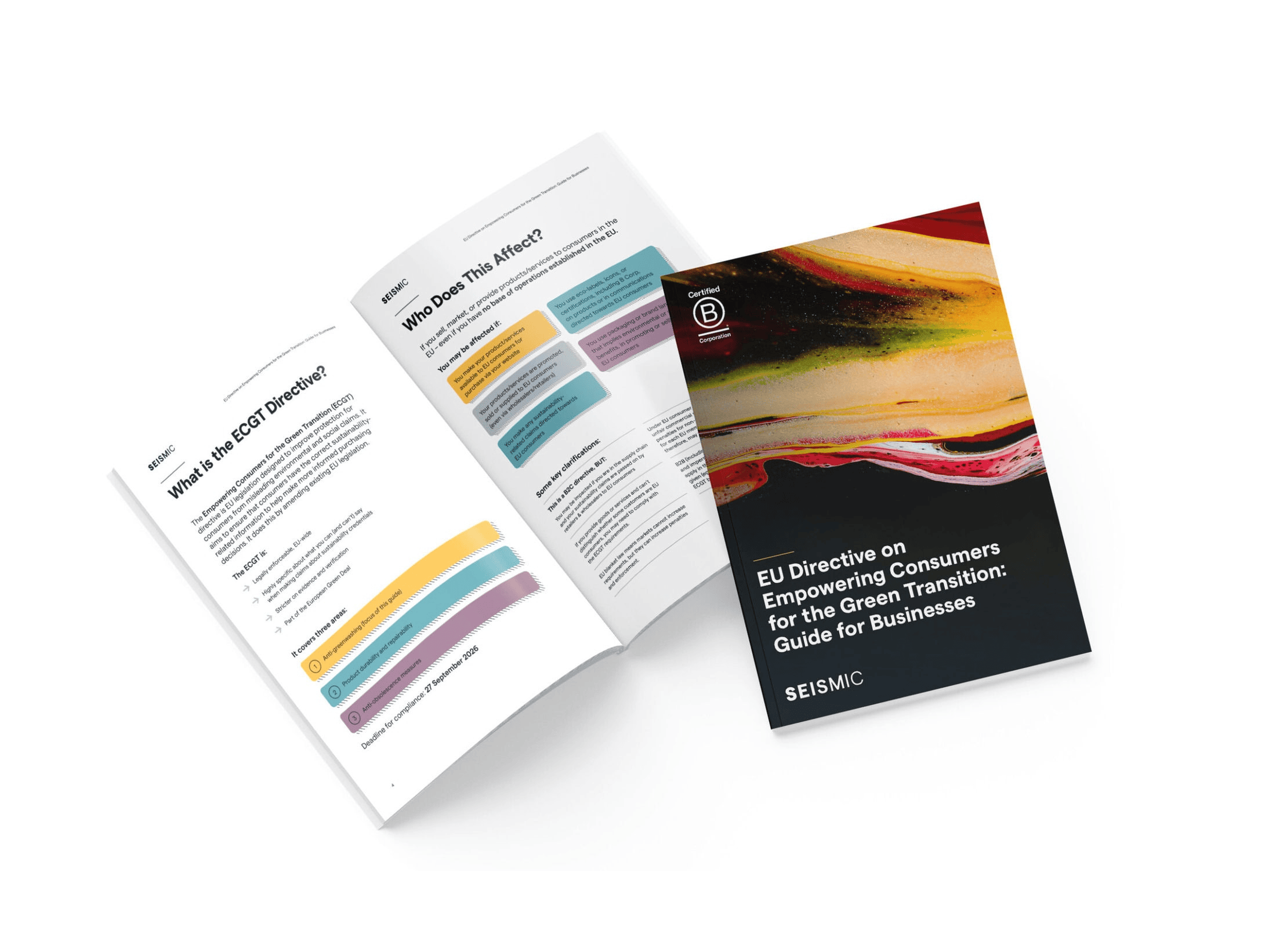
> Download the Business Guide to ECGT today
What’s inside
- What the ECGT covers and who is affected
- The claims, communications and certifications that must change
- The exact requirements coming into force from September 2026
- What B Corps need to do under the new standards
- How to complete the Three Cs audit
- A practical pathway to prepare across 2026